
 TB-500 has become one of the most talked-about “recovery peptides” online—especially in conversations about getting back to training after a tweak, supporting soft tissue, or simply feeling less beat up after hard sessions. If you’ve seen it listed as TB-500 5mg, that typically refers to a vial size commonly sold in the research peptide space.
But there’s a big difference between what TB-500 is marketed to do and what the research actually demonstrates. The strongest published data doesn’t focus on retail “TB-500” products specifically—it focuses on thymosin beta‑4 (Tβ4), the naturally occurring peptide TB-500 is generally associated with.
This article walks through both sides: the practical, consumer-facing intent first, then the science—what’s known, what’s plausible, and what’s still uncertain.
If you’re looking for our product page, you can find it here: TB-500 5mg.
Quick note on scope
This is an informational post about research and mechanisms. TB-500 products are commonly sold for research use, and this article is not medical advice or a treatment guide.
What TB-500 5mg is designed (marketed) to do
In plain terms, TB-500 is typically positioned as a peptide that may support:
- Recovery and downtime reduction after intense training cycles
- Soft tissue support (often discussed in relation to tendons, ligaments, and muscle)
- Mobility and comfort during the recovery process
- Overall repair signaling, especially where healing can be slow or frustrating
That’s the “why people care” side. The next question is: Why do people think it could help at all? That comes back to the biology of thymosin beta‑4.
TB-500 vs. Thymosin Beta‑4: why the distinction matters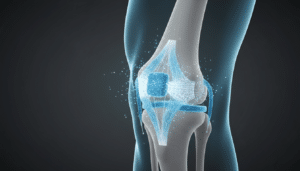
Thymosin beta‑4 (Tβ4) is a naturally occurring peptide present throughout the body and studied across multiple tissue types. It’s often described as playing roles in:
- Cell movement (migration)
- Tissue repair and remodeling
- Inflammation regulation
- Angiogenesis (formation of new blood vessels)
A widely cited review summarizes Tβ4 as being involved in processes like angiogenesis and inflammation modulation, and discusses various research directions and proposed mechanisms: Progress on the Function and Application of Thymosin β4 (PMC).
TB-500, as it’s commonly described in the peptide market, is a synthetic fragment associated with Tβ4-like activity. However, when you cite science, it’s more accurate to cite Tβ4 research directly unless a paper explicitly studied “TB-500” as the tested compound.
The research side: what scientists study (and what it suggests)
Most of what we can responsibly say about TB-500-like effects comes from preclinical work and mechanistic research around Tβ4. Here are the main themes you’ll see repeatedly.
1) Cell migration: “getting repair cells to the site”
A key part of tissue repair is getting the right cells to move into damaged areas. In multiple tissue contexts, Tβ4 has been studied for its relationship to cell migration, a foundational step in wound healing and repair cascades.
A review focused on ocular tissue describes Tβ4 as supporting cell migration and wound healing, while also discussing anti-inflammatory and anti-apoptotic properties in that context: Thymosin beta 4: A novel corneal wound healing and anti-inflammatory agent (PMC).
Even if you’re not writing about eye health, that paper is useful because it clearly outlines the broader biological roles—especially migration and inflammation control—that people extrapolate to other tissues.
2) Inflammation modulation: useful when recovery is “stuck”
Inflammation isn’t automatically bad—it’s part of normal healing. But when inflammation is excessive or prolonged, it can slow recovery and contribute to poor tissue quality or persistent discomfort.
Tβ4 is repeatedly discussed in the literature as having anti-inflammatory signaling effects in different models. The Frontiers/PMC review provides a broad overview of proposed pathways and applications: Progress on the Function and Application of Thymosin β4 (PMC).
3) Angiogenesis: blood supply as a bottleneck in repair
Angiogenesis (new blood vessel formation) is another major theme. Healthy blood flow matters for oxygen, nutrients, and the “construction materials” of repair.
Tβ4 is frequently linked to angiogenesis in the research literature, and that’s one reason it stays in the conversation around tissue regeneration: Progress on the Function and Application of Thymosin β4 (PMC).
4) Skin and wound repair + discussion of clinical work
Some authors discuss Tβ4 in the context of dermal healing and note clinical trial activity (in specific wound contexts). One review frames Tβ4 as having angiogenic and anti-inflammatory activity and discusses research across wound repair settings: Thymosin β4 Promotes Dermal Healing (PubMed).
This is useful in a blog because it shows that Tβ4 isn’t just a niche “gym peptide topic”—it has been evaluated in serious tissue-healing contexts.
What the research does not yet prove (important for credibility)
This is where many blogs get sloppy. If you want your post to read like a trustworthy resource (and not hype), include these points:
- Human data is limited compared to the volume of animal/cell research. Mechanisms may not translate 1:1 to real-world outcomes.
- TB-500 products aren’t all equivalent. The research is often on Tβ4 itself or specific formulations, not necessarily the exact peptide product sold online.
- No one should treat this like an approved therapy. Tβ4/TB-500 is not an FDA-approved treatment for injury repair, pain, or disease.
A balanced post doesn’t need to be negative—just accurate. Readers can handle nuance, and it improves conversions because it builds trust.
Why TB-500 5mg remains popular in recovery discussions
Even with the limitations, the interest makes sense. People want a tool that sits somewhere between:
- “Do nothing and wait”
- “Take pharmaceuticals and hope for the best”
Peptide research sits in that middle space for many enthusiasts: mechanistically interesting, widely discussed, but still emerging in terms of definitive human evidence.
If you’re exploring TB-500 for research purposes and want to view the product details, you can find it here: Syntech Peptides TB-500 5mg.
Bottom line
TB-500 5mg is widely positioned as a recovery-support peptide, but the best-cited scientific foundation largely comes from research on thymosin beta‑4 (Tβ4)—a peptide studied for roles in cell migration, inflammation modulation, angiogenesis, and tissue repair signaling.
If your goal is an evidence-aware approach, the best move is to treat TB-500 as part of a broader research conversation: promising mechanisms, real scientific interest, but still incomplete clinical certainty.