
How to Reconstitute Peptides: Professional Guide
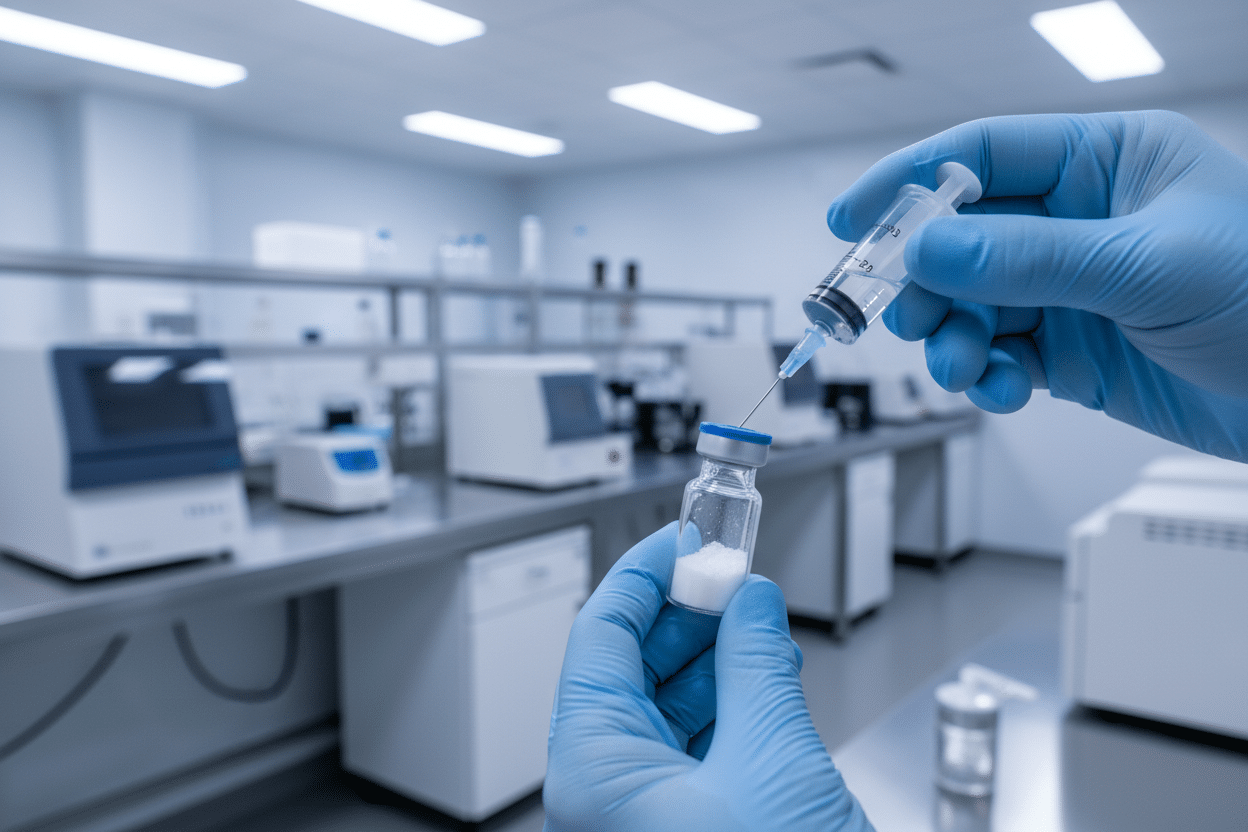
How to reconstitute peptides correctly is a fundamental skill for any laboratory researcher. Because improper handling can damage delicate molecular structures, following a precise protocol is essential. In this guide, we explain how to reconstitute peptides step-by-step to ensure maximum stability and research integrity.
Lyophilized Storage
Store powder in a cool, dry place away from light. Consequently, room temperature is fine for short-term stability.
Before ReconstitutionMixing Protocol
Use room temperature solvent. Gently swirl to dissolve. Therefore, you must never shake the vial vigorously.
Mixing ProtocolRefrigerated Storage
After mixing, store at 2-8°C. Furthermore, avoid freezing to prevent structural damage to the peptide bonds.
28-56 Day Shelf LifeHow to Reconstitute Peptides: Complete Protocol
Follow these step-by-step instructions for proper peptide handling and storage
Lyophilized (Powder) Form Storage
First, ensure your lyophilized peptides are stored in a stable environment. Although powder forms are relatively stable, they still require protection from heat and light to maintain their integrity before you learn how to reconstitute peptides for use.
- Temperature: Store in a cool, dry environment (15-25°C).
- Light Protection: Keep vials away from direct sunlight and UV exposure.
- Long-Term: For 6+ months, refrigeration at 2-8°C is recommended.
How to Reconstitute Peptides Properly
Next, you must prepare your workspace. When researchers ask how to reconstitute peptides safely, the answer always begins with aseptic technique. Furthermore, you should consult professional CDC safety guidelines to ensure a sterile environment.
- Solvent: Use bacteriostatic water (0.9% benzyl alcohol) for most research.
- Technique: Add solvent slowly down the side of the vial. Gently swirl—never shake.
- Dissolution: Allow 2-5 minutes for the powder to dissolve completely.
Critical Warning: Never inject air directly into the vial. This can cause peptide aggregation and loss of potency.
Post-Reconstitution Storage
Finally, once you have mastered how to reconstitute peptides, you must focus on storage. Because reconstituted peptides are fragile, they require strict temperature control. Consequently, you should store them in a refrigerator at 2-8°C immediately after mixing.
- Refrigeration: This is non-negotiable for maintaining stability.
- Never Freeze: Freezing can damage the peptide structure permanently.
- Light: Wrap vials in foil to protect from light degradation.
Shelf Life and Potency
In addition to mixing, understanding shelf life is vital. Knowing how to reconstitute peptides is only half the battle; you must also track their potency over time. Generally, most peptides maintain optimal potency for 28-56 days when refrigerated correctly.
Therefore, always label your vials with the date of reconstitution. If you are unsure how to reconstitute peptides for a specific long-term project, plan to mix only what you need for the immediate 4-week window.
Best Practices Summary
Key takeaways for optimal peptide handling in your research laboratory
Aseptic Technique
Always maintain sterile conditions. Use alcohol swabs and sterile syringes to prevent contamination during the process.
Temperature Control
Keep reconstituted peptides refrigerated. Remove only when needed and return immediately to cold storage.
Clear Labeling
Mark each vial with the name, concentration, and date. This ensures you know exactly how to reconstitute peptides for future batches.
Research Planning
Reconstitute only what you need. Freshly mixed peptides ensure consistent and reliable research results every time.
Ready to Start Your Research?
Now that you know how to reconstitute peptides, browse our catalog of high-purity research compounds.
Research Use Only
All products sold by SYNTECH PEPTIDES are intended strictly for laboratory and research purposes. They are not intended for human or veterinary use. Furthermore, they must not be used for food, cosmetic, or therapeutic applications. By purchasing from our website, you confirm that you are a qualified researcher. Consequently, you agree to use these compounds solely for legitimate research purposes.